
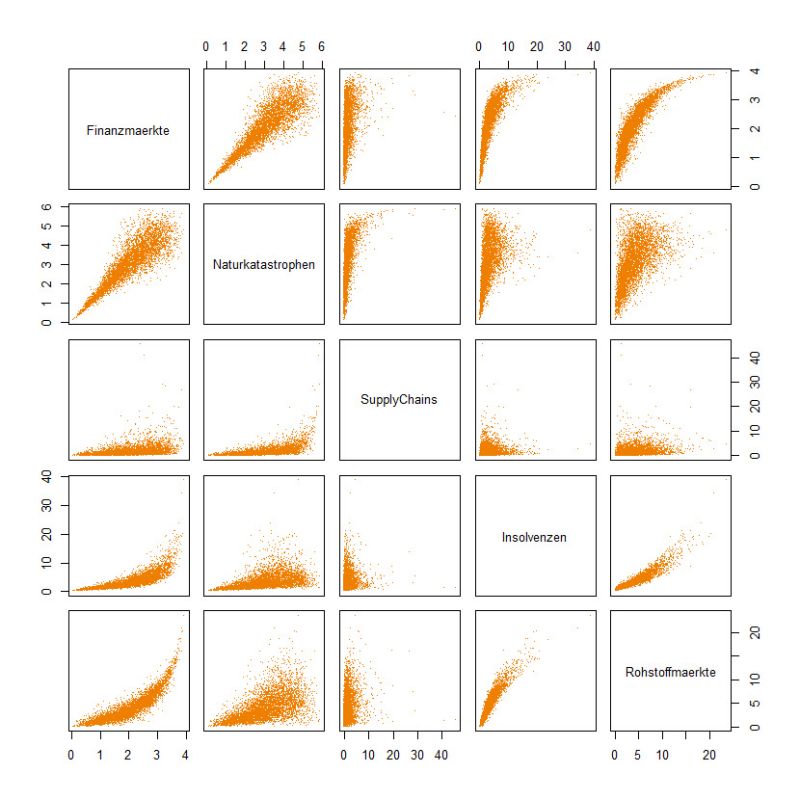
When the house of cards collapses My esteemed colleague Heiko Frings, a recognized expert in statistics and risk modeling, recently demonstrated very vividly how R can be used to apply modern methods like Vine Copulas, especially when it comes to Tail Dependencies. In other words, the situations in which not just one risk materializes, but several tip over at the same time. When a house of cards collapses, it doesn't fall card by card, it falls all at once. This is exactly where Vine Copulas show their strength: they realistically capture such dependencies in extreme situations, whether in a financial market crash, natural disasters, insurance, or regional supply chain failures. We've taken this approach further. With Risk Kit R, it's possible to integrate Vine Copulas and other cutting-edge methods directly into Excel simulations. And this matters, because: ● Excel is the real working environment of many companies. This is where the calculations for investments, projects, and decision-making are created. ● Anyone who had to reimplement these models outside of Excel would face an immense effort, often simply not feasible in practice. ● With Risk Kit, existing models in Excel can therefore be extended directly with tail dependencies, copulas, or external data sources (ECB, World Bank, Fed), without any break in the working environment. What matters is this: 99.9% of all applications can already be fully modeled using Risk Kit functions, with no additional code at all. Only in extreme special cases is it worth reaching for R, Python, or other frameworks for individual functions. The result: a platform that spans from the basics to cutting-edge methods, and that in turn integrates seamlessly into systems like the Enterprise Risk Evaluator. This makes research from the statistics community directly usable in corporate practice. And that's exactly what modern risk management needs.
This post was originally published on LinkedIn. View and join the discussion there