
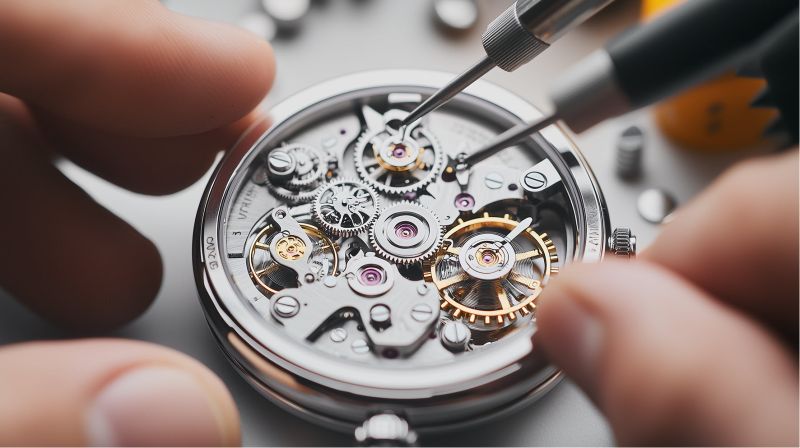
🕰️ “When every gear fits: How risk validation with models succeeds.” Many companies struggle to validate risks systematically. In classic enterprise risk management (ERM), risks are often treated as abstract overall risks, supported by expert assessments. But when a risk fails to materialize, it remains unclear: Was it because of a misjudgment? Or simply luck? Real validation is hardly possible. 🔧 It's different with modeled risks. A risk model works like a clockwork mechanism: each influencing factor is like a gear, with a clear function and measurable properties. Whether the whole mechanism works depends on whether the individual parts are set correctly. 📍The decisive point: you can observe and check each of these factors individually. - Did a risk factor develop as expected? - Were the assumptions made correct? - Were the relationships between the factors correct? 📊 Example: cyber risk A model might take into account, for example, the frequency and strength of attacks. Even if no damage occurs, you can check: - Did the number of attacks match expectations? - Did the attack patterns deviate significantly from the assumptions? ➡️ This is how validation based on data, not on gut feeling, comes about. Model-based risks are not a black box, they are a system that can be checked step by step. Just like a clockwork mechanism: when it doesn't run smoothly, you can see exactly what's causing it. How do you handle the validation of your risks? I look forward to hearing about your experiences. #ERM #RiskManagement #Validation #Modeling #CyberRisks #RiskSteering #EnterpriseRisk #RiskKit
This post was originally published on LinkedIn. View and join the discussion there